Coding with AI: from Zero to Hero
Building research and engineering systems with AI.
Shanghai Innovation Institute · Cross-disciplinary students
 Dequan Wang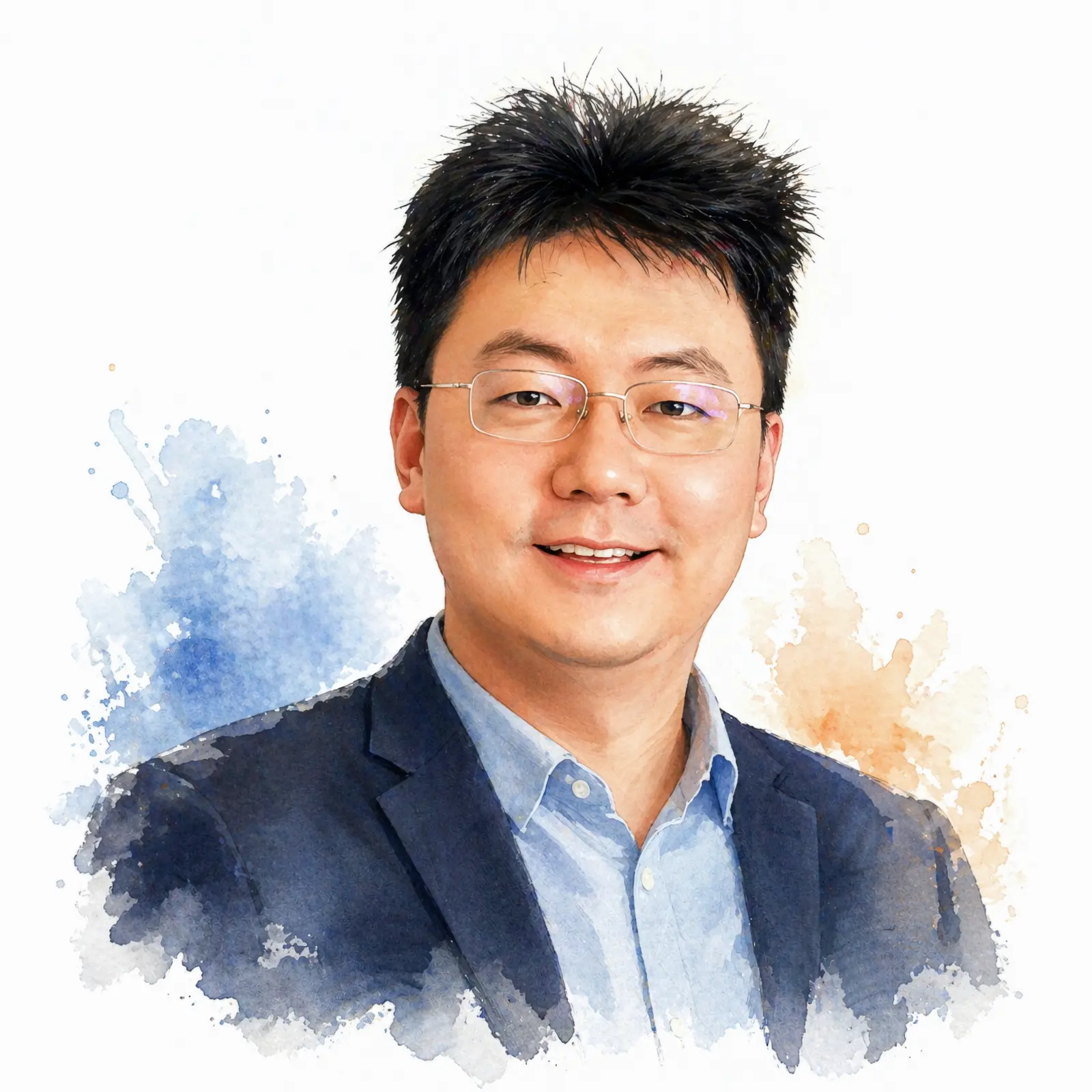

I want to build intelligence that can grow through discovery.
My bet is that a major next step in AI will come from learning to organize intelligence itself. As models become more capable, we can ask what kinds of investigation become possible—not only what tasks can be completed faster. I study how agent swarms can explore different ideas in parallel and turn their findings into knowledge that opens further lines of inquiry.
This is what making intelligence compound means to me: individual discoveries become collective progress, and the experience of one investigation changes what future investigations can achieve.
I came to this through deep learning, with computer vision as an early setting for studying adaptation and generalization. In TENT, we studied how a model can adapt during use from unlabeled test inputs.
Agents extended the question. They can act to obtain information, and their actions shape what they can learn next. Mathematics was an early ambition; coding gave us a practical setting in which to develop the approach. We could run programs, compare attempts, and explore how to put existing models to work together. Speed mattered because it let us pursue more within limited time.
Our mathematical work also changed what I wanted from a result. Solving a problem and offering a useful way to understand it are different achievements. I became more interested in what could travel beyond the original solution: a reusable method, a connection between fields, or a concept that makes a new class of questions approachable.
An agent swarm need not reproduce a team of people with fixed roles. I study how its organization can become part of what it learns: which lines of inquiry to pursue, what context each agent needs, and when a discovery should redirect work elsewhere.
Useful findings need to travel without making every agent follow the same path. Common goals can guide the investigation while different contexts preserve different possibilities. A counterexample found on one path might redirect several others; a useful intermediate result might become a shared starting point.
Experience should change more than the next plan. A learned method can improve how agents reason; a new abstraction can change how a problem is represented. Both can alter how work is divided and what the group chooses to explore. Earlier knowledge must also be open to revision when it no longer applies.
The scaling question is whether this lets more computation expand the range of problems a system can tackle, rather than merely repeat the same search. I want parallel exploration to produce knowledge—and that knowledge to change the reach and direction of later exploration.
I work on scientific problems because I want progress in AI to produce knowledge we did not have before. The scientific result matters in its own right; it also gives us a reason to push beyond what our systems can already do.
Code and formal mathematics offer settings in which proposals can be executed or checked. But a correct result and a useful new idea are different contributions. My long-term goal is to develop systems that help create new methods, concepts, and theories—ideas that let us approach problems we did not previously know how to tackle.
Experimental work in protein and crop science brings costs, delays, and changing conditions. It requires decisions about which uncertainties are worth resolving and which predictions deserve a test. This is the connection between AI for Science and Science for AI: discoveries are valuable outcomes, and the work of making them helps determine which AI capabilities to develop next.
The same ambition shapes my teaching: I want more people to be able to pursue questions that matter to them. A teacher's time is finite, while students need different paths into a subject. AI can extend the explanation, experimentation, and technical support available to each student.
Using that support well is itself a capability. Students need to learn how to question suggestions, combine tools and expertise, and decide whether the work is advancing their question. The aim is not to complete everything without AI, but to attempt more ambitious work with the understanding to direct it.
My role is to provide foundations and useful starting points, challenge weak assumptions, and leave room for students to develop a direction I would not have thought to assign. I want advances in artificial intelligence to become an expansion of human agency—and of who can participate in discovery.
My courses offer different starting points.
Building research and engineering systems with AI.
Shanghai Innovation Institute · Cross-disciplinary students
Understanding algorithms through implementation and experiments.
Shanghai Jiao Tong University · Undergraduate students
Studying deep learning through analysis and open-ended research.
Shanghai Jiao Tong University · Graduate students
Co-taught with Yue Ding and Jianfu Zhang.
An introduction to language models and agents for high-school students.
Shanghai Jiao Tong University · High-school students
Co-taught with Xiaofan Zhang.
Associate Professor2026–present
Assistant Professor2023–2025
Full-time Mentor2025–present
Research Scientist2023–2024
Ph.D. in Computer Science2016–2022
Advisor: Trevor Darrell
B.S. in Computer Science2012–2016